
Find Arizona Obituary Records
Arizona obituary records help families trace their roots and honor those who have passed. These records include death notices in newspapers, formal obituaries, and official death certificates from state and county offices. You can search for Arizona obituaries through local libraries, newspaper archives, and the state vital records office. Many older records are now free to view online. The state keeps death records going back to 1909, and some county records date even earlier. Whether you need a death certificate or want to find a loved one's obituary, Arizona offers several ways to search these important records.
Arizona Obituary Records Quick Facts
Understanding Arizona Obituary Records
Arizona is a closed record state. This means death certificates are not public records right away. Only certain people can get a certified copy of a recent death certificate in Arizona. These include the spouse, parents, adult children, grandparents, and siblings of the person who died. Legal representatives and those named in court orders can also request copies. After 50 years, death records become open to anyone for genealogy research.
The Arizona Department of Health Services runs the Bureau of Vital Records in Phoenix. This office has death records for deaths that happened in Arizona from 1909 to now. You can learn more about their services and hours on the Arizona Bureau of Vital Records website. The office is at 150 North 18th Avenue, Suite 120, in Phoenix. They are open Monday through Friday from 8 a.m. to 5 p.m.
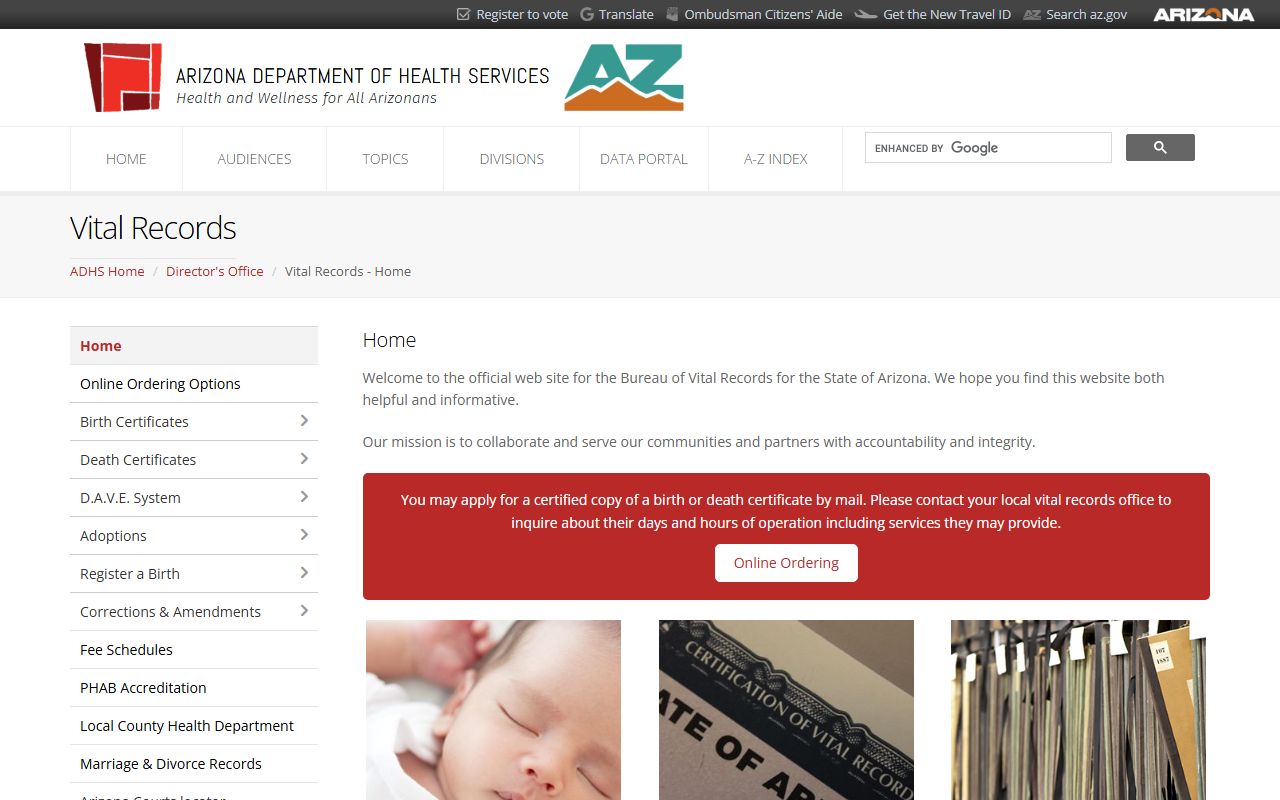
The state office can issue death certificates for any death in Arizona. County health offices can also issue copies. A certified death certificate costs $20 per copy. You need a valid photo ID to request one.
Free Arizona Death Records for Genealogy
Arizona offers free access to older death records through its genealogy database. Death records that are 50 years old or more are open to the public. Birth records open after 75 years. These records are valuable for family history research. The state has made it easy to search these older records online at no cost.
The Arizona Genealogy Database lets you search death records from 1870 to 1970. You can find it at genealogy.az.gov. The database shows images of actual death certificates. These are not certified copies, but they contain useful information for tracing family lines. You can view names, dates, places of death, and sometimes cause of death on these old records. The search is simple. Type in a name and see what comes up.
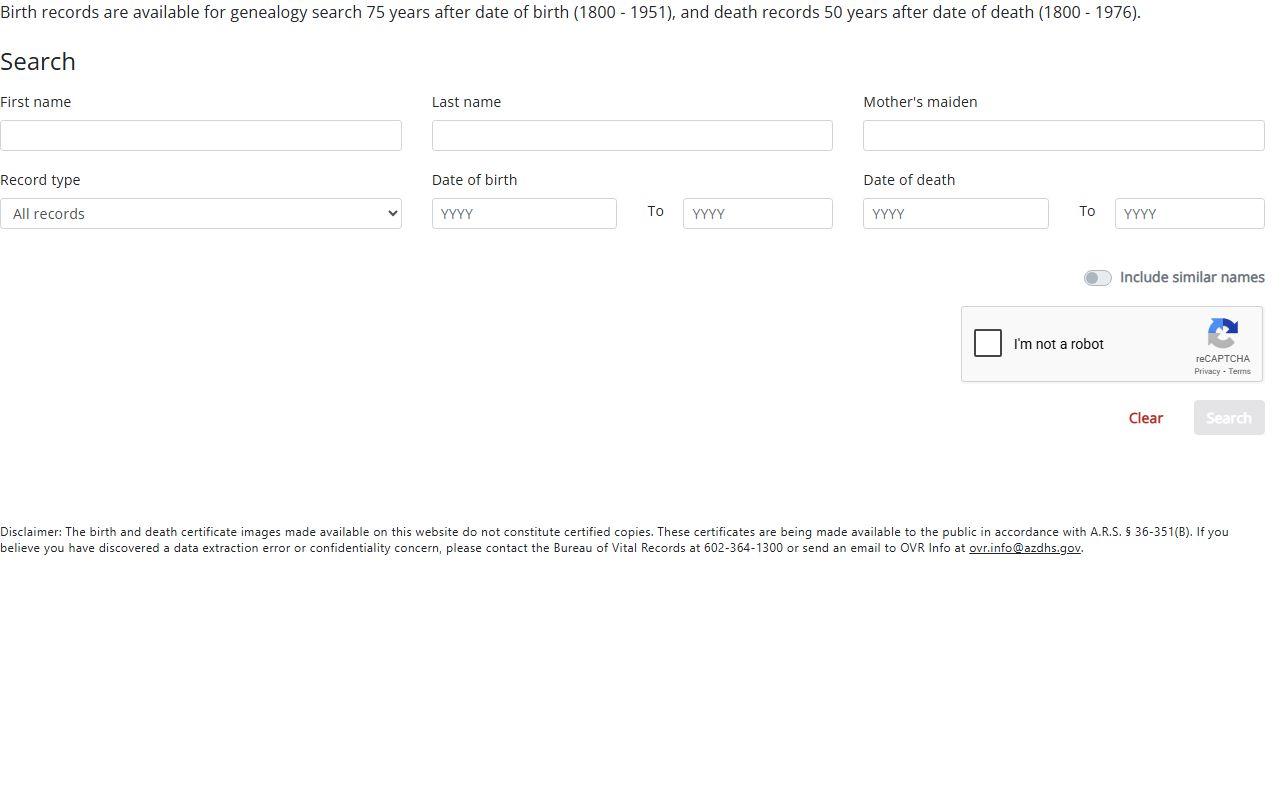
Under A.R.S. § 36-351(B), the state can release non-certified copies of vital records for genealogical research once they reach the age threshold. This law makes Arizona a good state for family history work.
How to Order Arizona Death Certificates Online
For recent death records, you can order certified copies through VitalChek. This is an official partner of Arizona Vital Records. The service lets you order from home any time of day or night. Processing fees apply on top of the $20 state fee. VitalChek offers different shipping speeds to meet your needs.
To order through VitalChek, you need several pieces of information about the deceased person. The Arizona VitalChek page walks you through the steps. You must provide a valid government photo ID. Acceptable forms include a state driver's license, state ID card, valid passport, or federal ID. The system checks your eligibility before processing your order. Only those legally allowed to receive death certificates can complete an order.
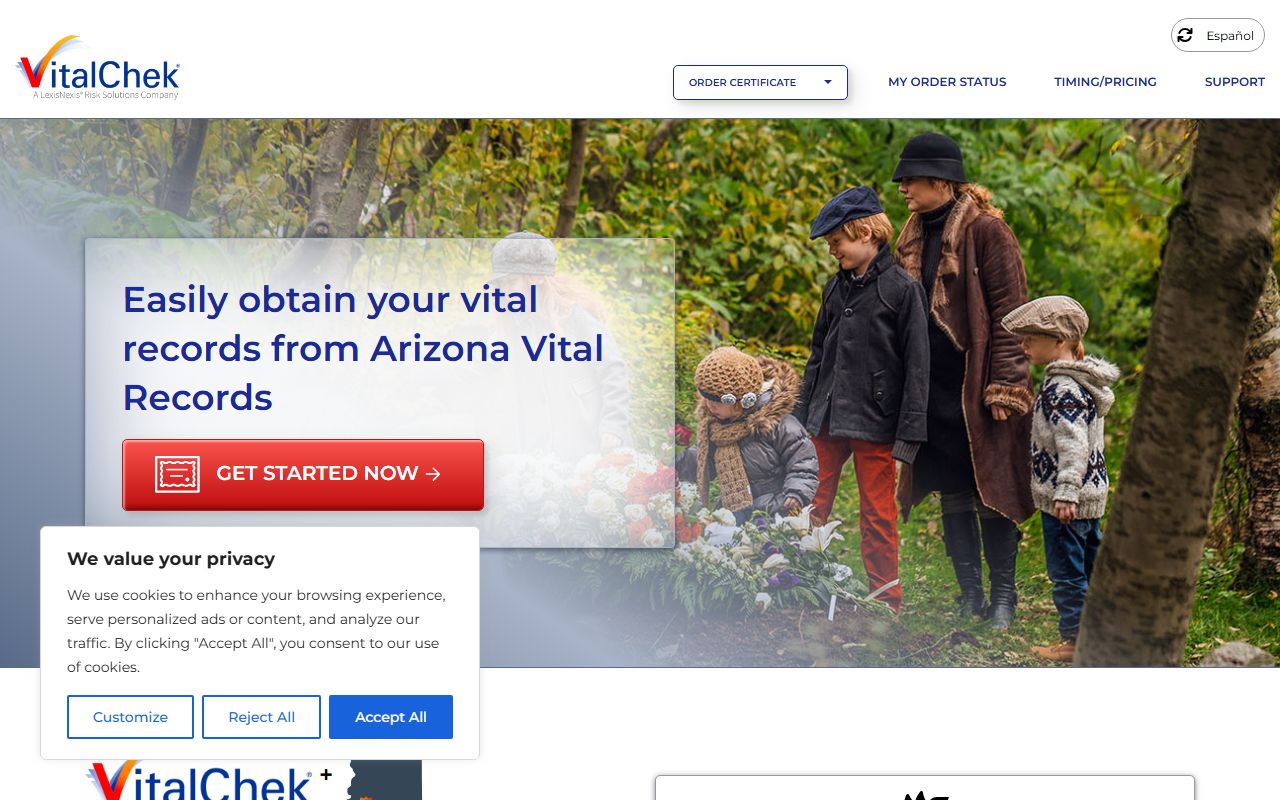
Death certificates ordered through VitalChek cost $20 per copy. Delivery options vary. Regular mail takes longer but costs less. Expedited shipping gets your certificate faster at a higher price.
You can also order by mail or in person. Mail requests go to the Bureau of Vital Records at PO Box 6018, Phoenix, AZ 85005. Include a money order or cashier's check. The bureau does not accept personal checks. In-person requests can be made at the Phoenix office or at county health department locations across Arizona.
Arizona Historical Records and Archives
The Arizona Memory Project is a digital archive run by the Arizona State Library. It holds photos, documents, newspapers, and other primary sources about Arizona history. Researchers can find obituaries in old newspaper collections. The archive has about 90,000 images and covers Arizona history from 1863 forward.
You can explore the collection at azmemory.azlibrary.gov. The Arizona State Library has the largest collection of historic Arizona newspapers in the state. These papers date back to 1859. Obituaries published in old newspapers are often the only record of a person's life and death. The Arizona Newspaper Project has over two million pages of newspapers on microfilm. Many of these have been digitized and are searchable online.
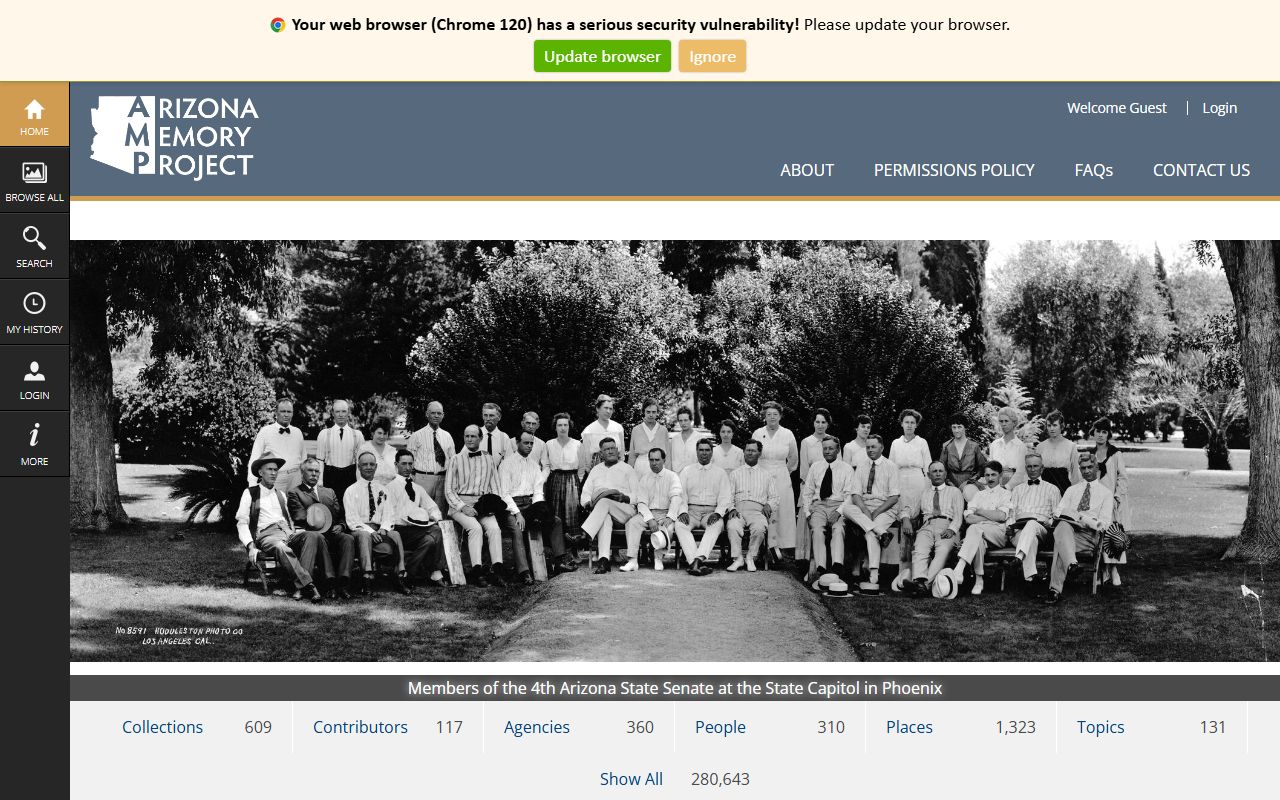
Most digitized newspaper content is pre-1963 due to copyright rules. Still, this covers a lot of ground for genealogy work.
Arizona State Library Obituary Services
The Arizona State Library offers helpful services for people looking for obituaries. Library staff will do obituary lookups if you give them a name, newspaper title, and exact date of death. There is no charge for this service. This is useful when you know someone died but cannot find their obituary on your own. You can contact the library through their genealogy research guide.
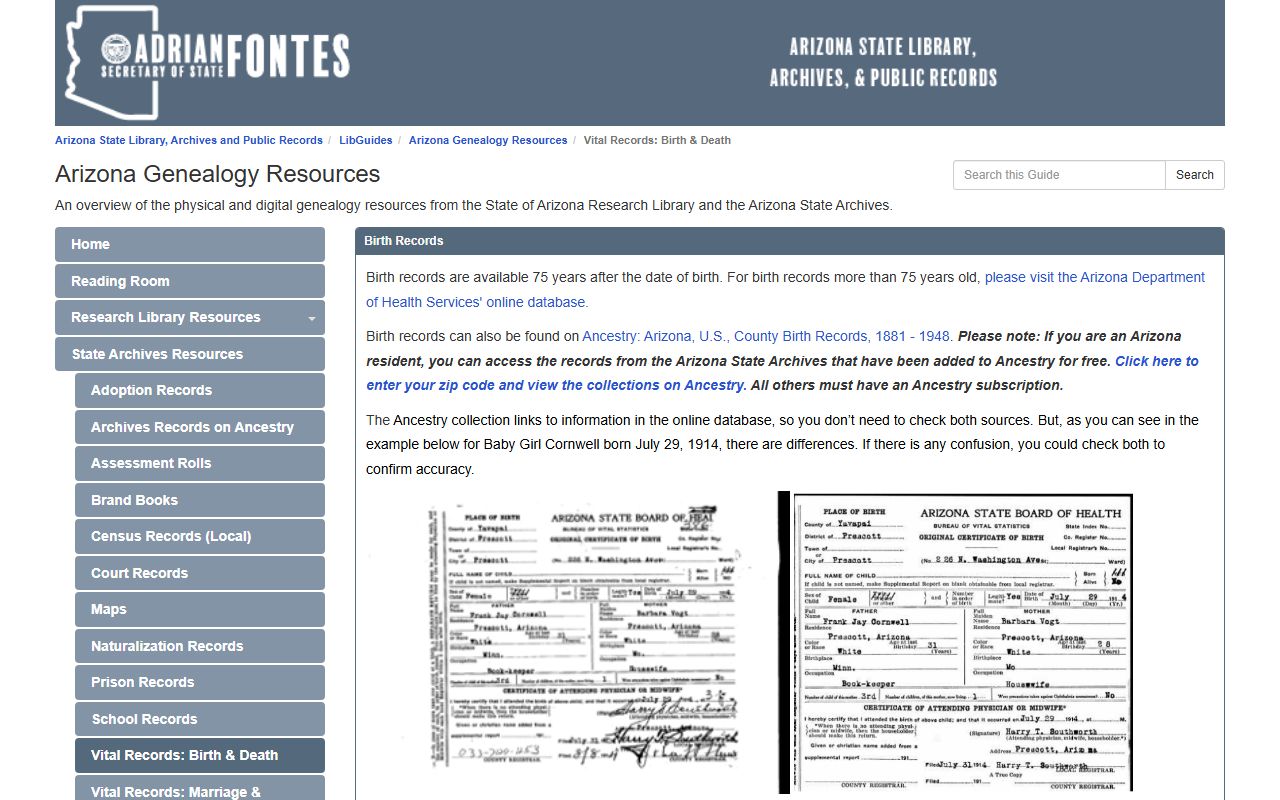
The Arizona Digital Newspaper Program is the state's effort to digitize newspapers. The collection grows each year. The vital records guide has links to Ancestry and other databases. Arizona residents can access records from the Arizona State Archives on Ancestry for free through a state partnership. You need to visit a library or use the library's online portal to get this free access.
Other resources at the state library include census microfilms, county death records, and coroner reports from some areas. These can fill in gaps when you cannot find an obituary or death certificate.
Arizona Laws on Death Records
Arizona law sets clear rules about death records. The statutes cover who can get copies, how long records stay private, and how deaths must be reported. Knowing these laws helps you understand what records you can access and how to request them.
A.R.S. § 36-301 defines key terms used in vital records law. A death certificate is a registered record that documents a death. A certified copy is an official reproduction that a registrar has verified as true and exact. Only certified copies have legal standing for most purposes.
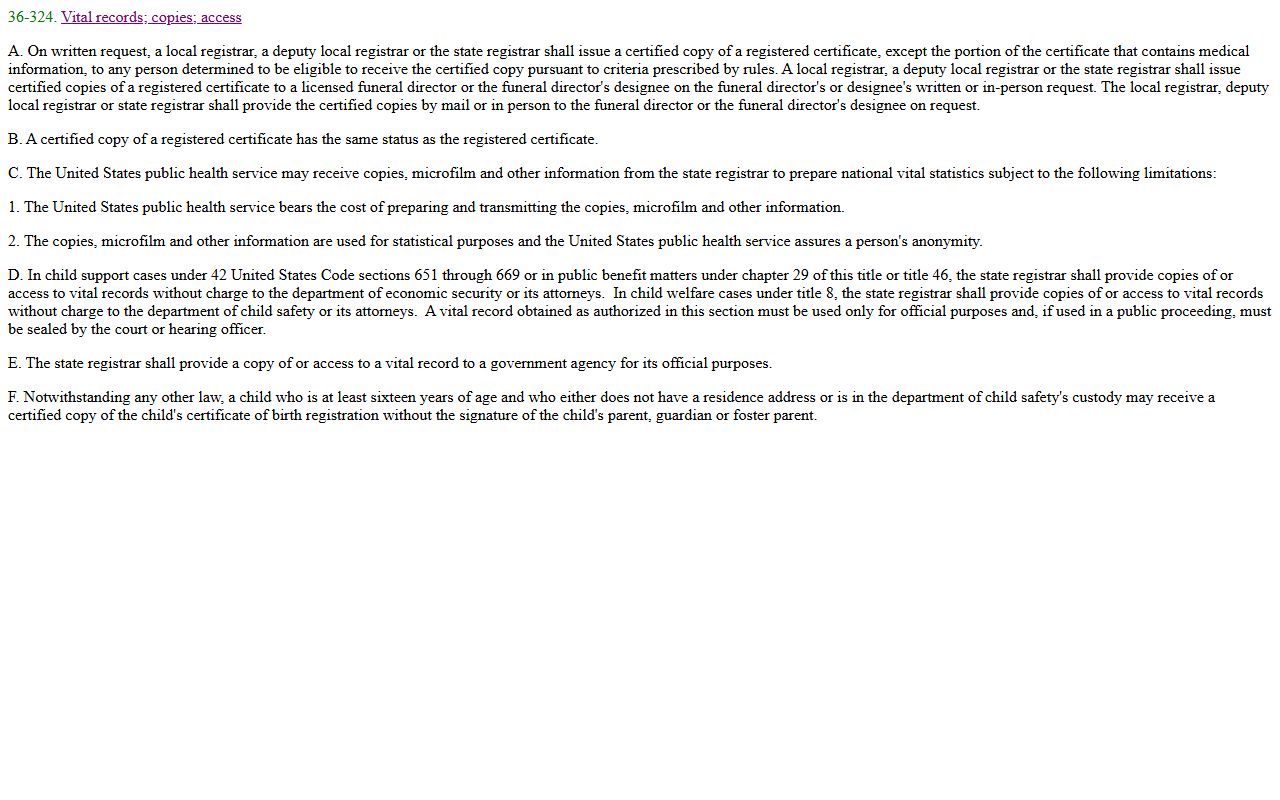
A.R.S. § 36-324 covers who can get copies of death certificates. The state registrar, local registrar, or deputy registrar can issue certified copies to eligible persons. The rules specify which family members and legal parties qualify. A certified copy has the same legal status as the original registered certificate.
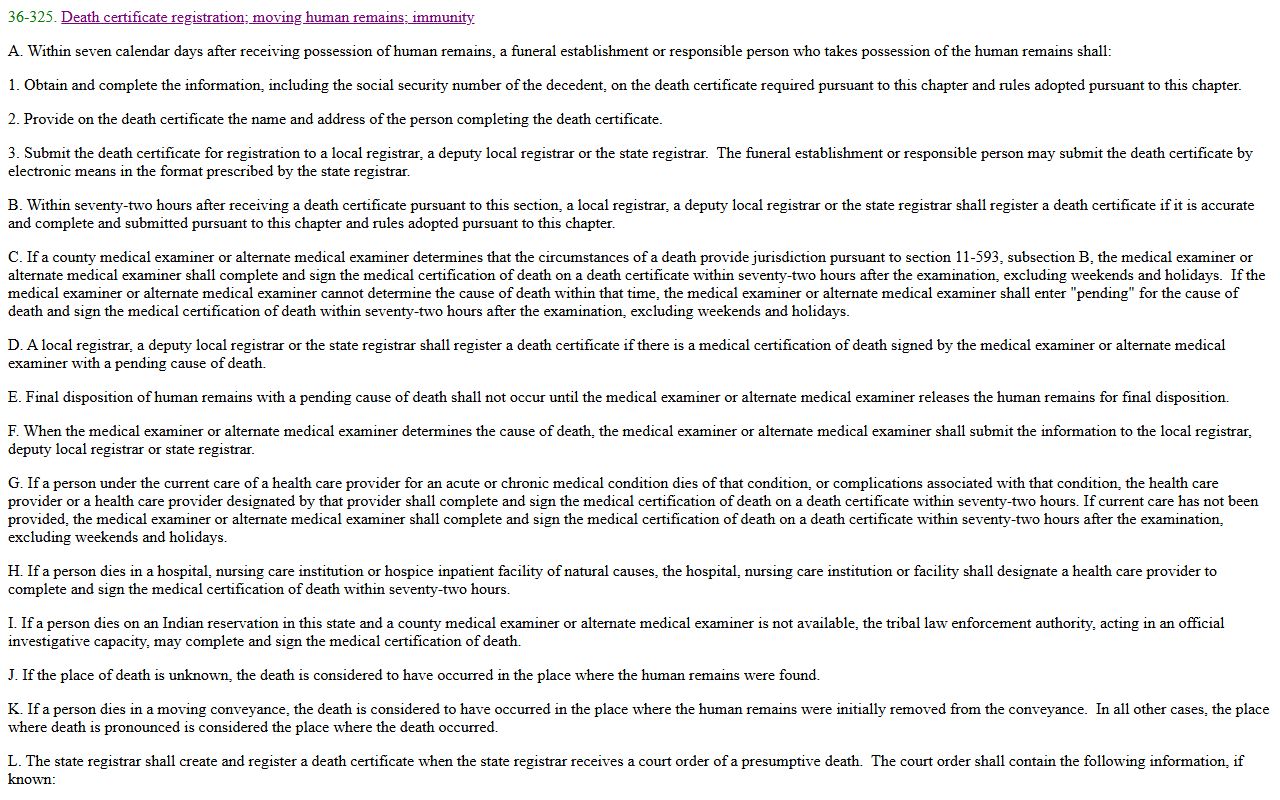
The death certificate registration process is set out in A.R.S. § 36-325. A funeral home or responsible person must get and fill out the death certificate within seven days of taking possession of the body. The registrar must then register the certificate within 72 hours if it is accurate and complete. This law ensures deaths are recorded quickly and correctly in Arizona.
Deaths under certain conditions require a medical examiner investigation. A.R.S. § 11-593 lists these cases. They include deaths not under a doctor's care, deaths from violence, unexpected deaths, deaths in prison, and deaths in suspicious circumstances. The county medical examiner handles these cases and issues the death certificate.
Where to Find Arizona Obituaries
Arizona obituaries appear in many places. Newspapers are the most common source. Families often publish death notices and full obituaries in local papers. These give details about the person's life, survivors, and funeral plans. Here are the main sources for Arizona obituaries:
- The Arizona Republic (Phoenix) at Legacy.com
- Arizona Daily Star (Tucson) at tucson.com
- East Valley Tribune (Mesa, Tempe, Chandler area)
- Arizona Daily Sun (Flagstaff)
- Yuma Sun (Yuma)
- Local funeral home websites
Many funeral homes post obituaries on their websites. These often include photos and guest books where people can share memories. Some families also use social media to announce deaths and share tributes. For older obituaries, library archives and historical societies are your best bet.
County public libraries often have local newspaper collections on microfilm. Staff can help you search for obituaries from past decades. The Pima County Public Library in Tucson, for example, has Arizona Daily Star archives going back to 1880. The Mesa Public Library offers obituary search services for a small fee.
How to Request Arizona Death Certificates
You can get a death certificate from the state office or from a county health department in Arizona. The process is similar at both levels. You fill out an application form. You show proof of your identity. You pay the fee. Then you wait for your certificate to arrive or pick it up in person.
Here is what you need to request a death certificate in Arizona:
- Full name of the deceased
- Date of death (or approximate date)
- Place of death (city and county)
- Your relationship to the deceased
- Valid government-issued photo ID
- Payment of $20 per certified copy
Processing times vary. In-person requests at most county offices are same-day. Mail requests to the state take longer. Pima County warns that mail orders can take 4 to 6 weeks. Maricopa County is usually faster. If you need a certificate quickly, visit a local office in person or use VitalChek with expedited shipping.
Note: The state office does not accept personal checks. Use a money order or cashier's check for mail orders.
Browse Arizona Obituary Records by County
Each Arizona county has its own health department that can issue death certificates. County offices may also have local newspaper archives and historical records. Pick a county below to find obituary resources in that area.
Arizona Obituaries by City
Residents of major Arizona cities can find obituaries through local libraries, newspapers, and funeral homes. City libraries often have newspaper archives and genealogy databases. Pick a city to find local obituary resources.